Concrete Pumping - Summer 2009
Although the infrastructure stimulus plan has given the construction industry hope of recovery, to date, it has been slow in building enough momentum to benefit the whole industry. In some areas of the country, contractors have been suffering for a long time. How can we survive down markets, and how can we best prepare for the future, once the economy has rebounded?
One of the best survival tools is experience. If you have survived a market recession before, you have done things that have helped you get through and grow as the market returned. If you’re a relative newcomer to the business, then you probably want to heed the advice of these survival experts.
Tom O’Malley, marketing director of Schwing America, commented that a couple of pumping contractors that he was talking to said they were going on the road to take on whatever kind of work they could get. They are determined to stay in business and are willing to do whatever is necessary to survive.

Another contractor said that he was parking one of his four pumping units to conserve costs. He hated the fact that he had to lay off the operator, but didn’t have a choice. He said that he prepared the unit for long-term mothballing, and doing this will cut his insurance costs as well as maintenance and payroll costs.
Voice of Experience
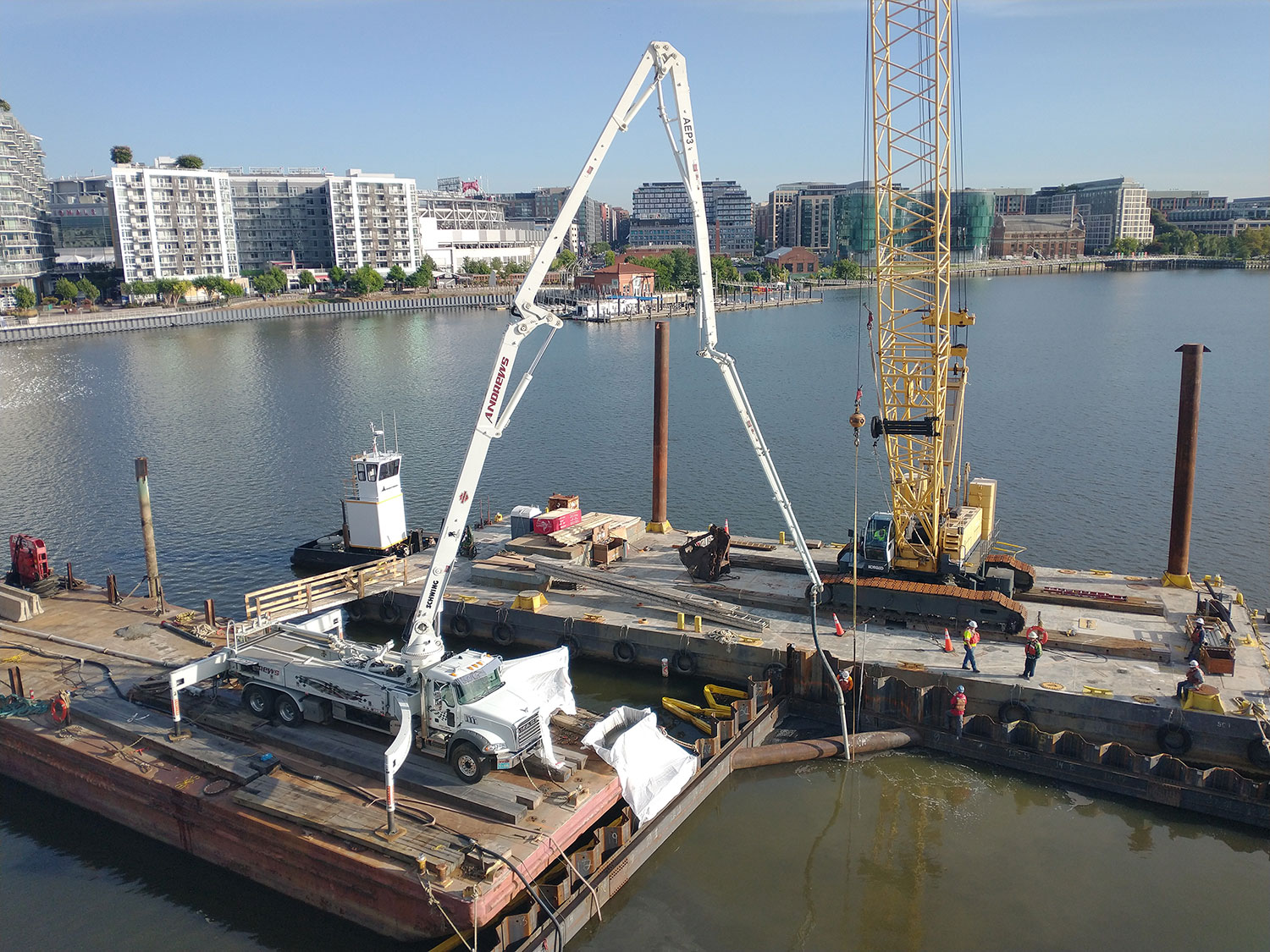
Dennis Andrews, Andrews Pumping in Washington D.C., is also a Schwing America distributor and a board member of ACPA. Andrews, originally from Detroit, decided that he didn’t want to battle the local economy so he relocated to Las Vegas. After four years of operating his concrete pumping company in the desert, he decided that the D.C. market looked like it would be more economically stable than other markets, and moved his operation there. He felt that it was a good decision then—and still does.
Andrews has survived several economic recessions over the course of his 30 years in the business and has learned that sometimes you need to do things a little differently than you normally would to get by. In order to keep his business going during the current economic difficulties, he is doing other work in addition to concrete pumping. One area where he has found opportunity is in slab jacking, which doesn’t seem to have been affected by the economy.
Andrews said that he is operating with a short staff and has asked the employees to pull some double shifts when necessary. To compensate for the extra time and effort, Andrews gives his employees Friday afternoons off when possible.
He cites a couple of factors contributing to today’s problems: the number of contractors who got into the concrete pumping business when the industry was on the upswing, and the number of residential contractors who have come over to the commercial side since the residential market collapsed.
Andrews quickly pointed out the fact that contractors who have been in the business for a number of years have not only acquired experience, but they have also acquired an inventory of attachments, tools, riggings, and other equipment that may not be readily available to everyone. He also noted that the experienced concrete pumping contractor has probably encountered situations that require unusual solutions. Because of their experience and equipment, these contractors are ready and able to handle these situations. Newcomers don’t have the skills or the tools to deal with more challenging projects. Andrews noted, “With more than 30 years’ experience in the business, I continue to add to my inventory of knowledge and equipment.”
Right now, Andrews is repairing rather than replacing equipment. For example, he recently replaced the transmissions in four of the company's pickups to keep them running. He said that the trucks were ready to be replaced as soon as it became economically sensible to do so.
Getting Creative
One of the more creative approaches to improving your chances of survival in the current concrete pumping market, Andrews pointed out, is the filling of underground storage tanks. “It’s cleaner, faster, and cheaper than removing them,” he said, “and is often more environmentally friendly.”
We discussed this idea a little more and explored the market possibilities, which include abandoned or closed service stations, as well as hospitals, buildings, institutions, and other facilities that had fuel storage either for heating purposes or for standby power units. There are also many homes and apartment buildings that are stuck with abandoned underground storage tanks.
Underground storage tank cleanup is included in some of the infrastructure stimulus package funding. You will need to check with local agencies to determine approved methods for filling these units, and you can probably also get a list of some sites that have been tagged by the EPA or other agencies, either for cleanup or removal.
“The important thing to remember,” Andrews pointed out, “is that you have to let people know that you can perform this kind of service. You can’t sit and wait for calls. They’ll never happen.”
What Else?
Once Andrews’ brain was in gear, pumping out suggestions, they started coming one after the other. Each thought stimulated another. “Another thing we’re doing,” he added, “is letting other businesses in the area know that we have a variety of capabilities. For example, we have truck and equipment mechanics as well as a welder. Neighboring businesses with trucks or equipment needing servicing can be approached, and we can keep our people working by doing their repair work for them. They don’t have to travel halfway across town in heavy traffic to get their work done.”
Keeping good employees on the payroll is important because once the economy changes, you will wish you still had them. Experienced operators, mechanics, welders, and the like can be hard to find. And, as you know, the training and learning curve can be long and frustrating.
A couple of his other ideas were also quite interesting. Andrews suggested taking the time to re-value your equipment based on current market values. If the equipment is financed, there may not be room to make adjustments, but if it isn’t, you may be able to save a considerable amount of money by matching your insurance coverage to the current market value. “If anything happens to that equipment,” he said, “all you are going to get is the current market value, not the insured value, so why pay a higher-than-necessary premium to the insurance companies?”
Depending on the size and age of your fleet, this could translate into thousands of dollars in savings each year. Although you will want to keep an eye on equipment market values and adjust accordingly so that you don’t end up short, it could be well worth the time and energy you spend.
Reusing, Recycling
How are you heating your facilities? Have you considered using the waste oils, engine, and hydraulic oils to heat? Andrews notes that there are several advantages to doing this: you not only cut your heating costs, but you also eliminate the problem of hazardous waste disposal. Again, depending on the size of your operation, you could be saving thousands of dollars in heating and waste oil disposal costs. When the times are tough, every little bit can help.
“This is a good time to green your business,” Andrews says. “Heating oil is one area, but there are others. Look at your vehicles. Do you need pickups with 4-wheel drive or will regular drive work? Recycling is another way of adding to the pot, especially with aluminum at its current price level.” (Recycled aluminum, in less than truckload volumes, ranges from a couple of cents per pound up to 50 cents per pound. In truckload lots, the price goes up to a high of 60 cents per pound for extruded aluminum.) He also suggested going to paperless invoicing and files to minimize all the associated costs.
He recommended getting the employees involved in the recycling efforts and using the funds that resulted for an employee function.
Andrews said, “Every year you’re in business, you’re that much wiser.” He noted that experience was the most important ingredient in surviving the economy. “When things start to turn, you have to be ready to work with the market. You have to be there and be ready.”
Protect Your Assets
During tough economic times, carefully managing your fleet and equipment can contribute to your survival, so take note of these reminders:
Moth-balling: Make certain that you prepare the equipment for long-term storage. If you contact your equipment manufacturer, you can get a list of recommended practices. Different areas of the country require different types of preparation.
Maintenance: Follow recommended manufacturer maintenance practices. Don’t cut corners. Safety always has to be a primary concern, and usually suffers when companies cut back on maintenance. Equipment that is properly maintained performs more efficiently and economically. And, preventative maintenance practices are the best insurance against catastrophic failure.
Sizing to fit: Use equipment that is sized to fit the job. Too big will usually result in unnecessary operating costs; too small will usually result in excessive wear on the equipment and longer-than-necessary-time to complete the job.
Operator training: It is a fact that trained, skilled, and experienced operators can and do make a difference to operating costs, equipment longevity, efficiency, and quality of completed work.
Put your experience to work for you and get ready to bid on the next job. The economy will start gaining momentum, so be prepared. The amount of money that is being put into the economy will start producing the kind of results that will put you back to work, and good business practices put into play during tough times can be carried forward into better ones.