
Concrete Pumps Types, Uses, Equipment & Expert Guidance
Andrews Equipment The Right Pump for Every Pour
Concrete pumps have become an essential part of modern concrete placement. Whether the job involves a residential foundation, commercial slab, multi-story structure, or a difficult-access pour, the right concrete pump can move material efficiently from the ready-mix truck to the placement point.
But not every pump is right for every project.
Choosing the correct concrete pump depends on factors such as required reach, concrete volume, pumping distance, mix design, aggregate size, jobsite access, available setup space, and the speed at which the concrete needs to be placed.
At Andrews Equipment, concrete pumping equipment is a core part of what we do. We help contractors and concrete professionals with concrete pump rentals, equipment sales, parts, service, repairs, and equipment selection.
This guide explains how concrete pumps work, the different types available, how to choose the right pump, and what contractors should consider before renting or purchasing concrete pumping equipment.


What Is a Concrete Pump?
A concrete pump is a piece of equipment designed to move freshly mixed concrete from a ready-mix truck to the location where it will be placed.
Instead of relying solely on the truck’s discharge chute, wheelbarrows, buckets, or other manual placement methods, a concrete pump moves the material through a system of pipe, hose, or an articulating boom.
Concrete pumps are especially useful when the placement area is difficult to reach directly from the mixer truck.
Common applications include:
- Foundations
- Footings
- Walls
- Slabs
- Commercial construction
- Residential construction
- Multi-story projects
- Pool construction
- Infrastructure work
- Difficult-access pours
Concrete pumping can also help contractors place material more efficiently while reducing the amount of manual handling required on the jobsite.
How it Works How Does a Concrete Pump Work?
Although concrete pumps vary considerably in size and configuration, the basic process is similar.
Concrete Enters the Hopper
The ready-mix truck discharges concrete into the pump’s receiving hopper.
The hopper provides a steady supply of concrete to the pumping system while an agitator helps keep the material moving.
The Pump Moves the Concrete
Inside the pumping system, hydraulically driven cylinders move concrete from the hopper into the delivery system.
The alternating action of the pumping cylinders creates a continuous flow of material.
Concrete Travels Through the Delivery System
Depending on the equipment being used, concrete may travel through:
- Steel pipe
- Flexible hose
- A truck-mounted placing boom
- A combination of pipe and hose
The layout of the delivery system depends on the pump, jobsite, placement distance, and application.
Concrete Reaches the Placement Area
The material exits the delivery hose or boom at the point where the placement crew needs it.
This allows concrete to be delivered over, around, above, below, or through obstacles that might otherwise prevent the mixer truck from getting close enough to the pour.
Need Help Choosing a Concrete Pump?
Every pour is different.
If you are unsure what pump you need, contact Andrews Equipment with the basic details of your project, including your yardage, required reach, pumping distance, concrete mix, and jobsite conditions.
We can help you determine the concrete pumping equipment that makes the most sense for the job.
What Are the Different Types of Concrete Pumps?
There is no single concrete pump that is ideal for every project.
The most appropriate equipment depends on the type of pour, required output, access, reach, concrete mix, and jobsite conditions.
Concrete Boom Pumps

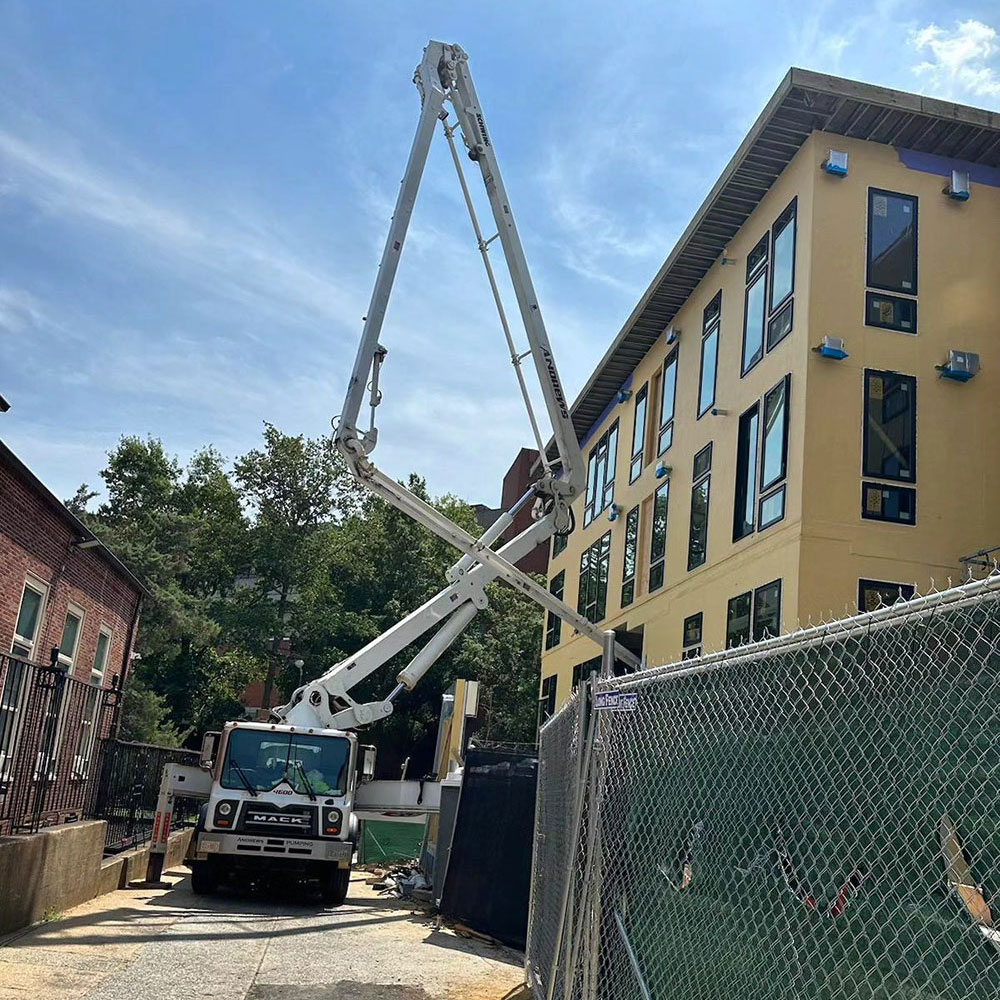
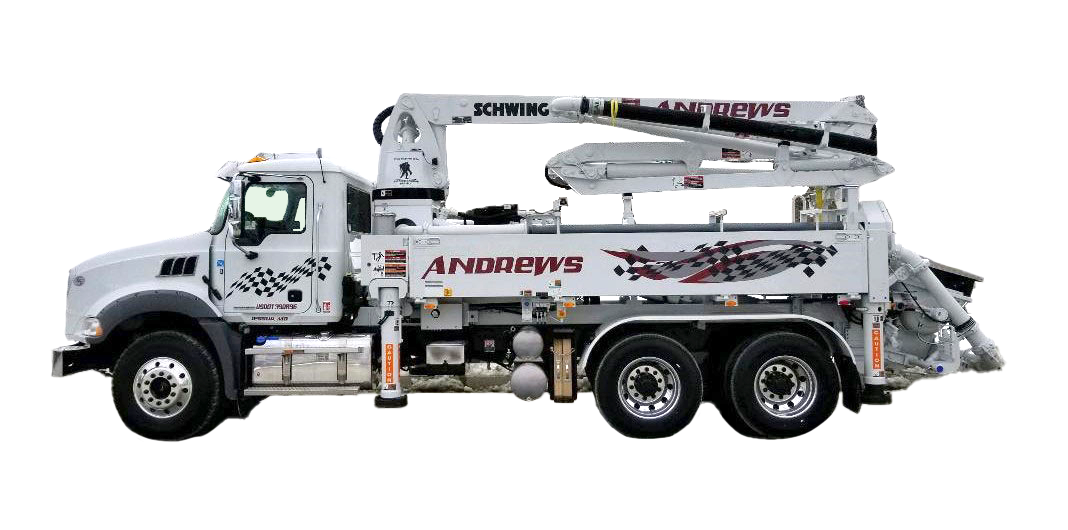
A boom pump is typically mounted on a truck and uses a hydraulically operated articulating boom to position the delivery line.
Boom pumps are commonly used when concrete needs to be placed over obstacles or at significant vertical or horizontal distances.
They are often used for:
- Commercial construction
- Large slabs
- Multi-story projects
- Foundations
- Walls
- High-volume placements
- Jobs requiring substantial reach
Boom pumps are available in different boom lengths, making proper equipment selection important.
A larger pump is not automatically the better pump. Available setup space, outrigger requirements, access, and actual placement distance all need to be considered.
Trailer Concrete Pumps
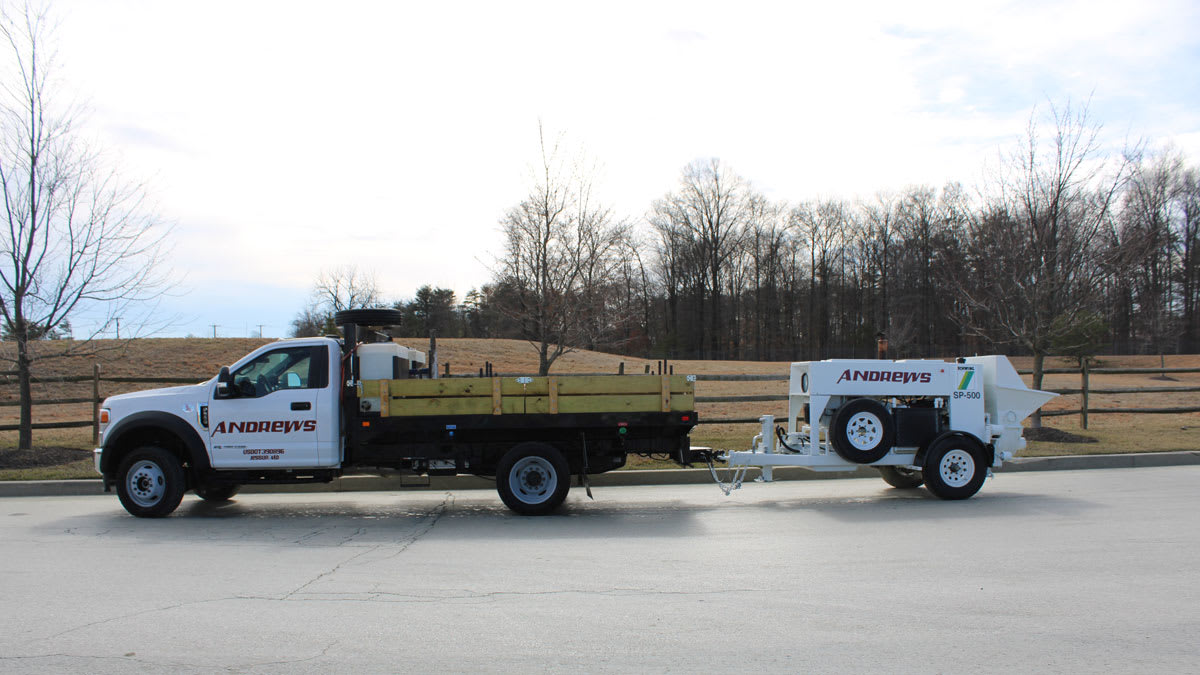
Trailer-mounted concrete pumps are towable units that typically move concrete through a system of delivery pipe and flexible hose.
Their compact size makes them useful on jobs where a large boom truck may not be necessary or where space is limited.
Trailer pumps are commonly used for:
- Residential foundations
- Footings
- Slabs
- Sidewalks
- Pool construction
- Masonry applications
- Smaller commercial projects
- Difficult-access pours
Depending on the pump and application, delivery line can be configured to move concrete significant distances from the equipment.
Line Pumps

The term “line pump” generally refers to a concrete pump that moves material through a delivery line rather than using an articulating placing boom.
Trailer pumps are commonly used as line pumps, which is why the terms are sometimes used interchangeably in the field.
Line pumping can be particularly useful when concrete needs to travel through narrow spaces, around structures, through buildings, or across jobsites where boom placement is not practical.
Truck-Mounted Line Pumps

Truck-mounted line pumps, also known as a city pump, combine the mobility of a truck-mounted unit with hose or pipe delivery.
They can offer contractors another option between smaller trailer pumps and larger boom pumps, depending on the project.
Grout Pumps

Grout pumps are designed for applications involving grout and other specialized cementitious materials rather than conventional ready-mix concrete placement.
They may be used for applications such as:
- Masonry block fill
- Structural grout
- Equipment bases
- Repair work
- Void filling
- Specialty construction applications
Material characteristics and pumping requirements can vary significantly between concrete and grout, making proper pump selection important.
Boom Pump vs. Line Pump: What Is the Difference?
One of the most common questions contractors have is whether a project requires a boom pump or a line pump.
The answer depends on the job.
| Consideration | Boom Pump | Line or Trailer Pump |
|---|---|---|
| Placement method | Articulating boom | Pipe and hose |
| Reach | Excellent vertical and horizontal reach | Depends on line configuration |
| Setup space | Generally requires more room | Generally smaller footprint |
| Access | Excellent for reaching over obstacles | Excellent for confined or indirect access |
| Production | Often suited to larger-volume pours | Varies by pump and application |
| Typical projects | Residential, commercial and larger pours | Residential, smaller pours, difficult access |
The best choice is not necessarily the largest piece of equipment available.
The goal is to select the pump that provides the required output and reach while fitting the physical limitations of the jobsite.
What Size Concrete Pump Do I Need?
Choosing the correct concrete pump requires more than knowing how many yards of concrete are being poured.
Several jobsite and material factors should be considered before selecting equipment.
Vertical Reach
How high does the concrete need to be placed?
For boom pumps, vertical reach is one of the primary equipment specifications.
Buildings, retaining walls, elevated decks, and other structures may require additional boom reach.
Horizontal Reach
How far is the placement point from the location where the pump can safely set up?
A pump may have sufficient vertical reach but still be unable to reach far enough horizontally once the actual jobsite layout is considered.
Pumping Distance
Line pump applications require careful consideration of the total delivery-line distance.
The configuration may include:
- Horizontal pipe
- Vertical pipe
- Flexible hose
- Elbows
- Reducing sections
The complete system affects pumping requirements.
Concrete Volume
How many cubic yards need to be placed?
A small residential pour and a large commercial slab have very different equipment and production requirements.
Required Output
Contractors should also consider how quickly the concrete must be placed.
Pump output is typically expressed in cubic yards per hour, but published maximum output does not always represent actual production on a working jobsite.
Concrete Mix Design
Not every concrete mix pumps the same way.
Important factors may include:
- Slump
- Aggregate
- Cement content
- Admixtures
- Mix consistency
- Specialty materials
A pumpable mix helps maintain consistent material flow through the pumping system.
Aggregate Size
Maximum aggregate size is an important equipment consideration.
Pump specifications, hose diameter, delivery pipe, and mix design all need to be compatible.
Jobsite Access
Before selecting a pump, determine whether the equipment can physically reach and safely operate from the desired setup location.
Consider:
- Road width
- Driveway access
- Gates
- Weight restrictions
- Ground conditions
- Slopes
- Traffic
- Buildings
- Trees
- Existing equipment
Available Setup Space
Boom pumps require adequate space for both the truck and outriggers.
A location that appears large enough for the truck may still not provide enough room to safely deploy the equipment.
Overhead Obstacles
Power lines, trees, structures, and other overhead hazards can significantly affect boom pump placement.
These conditions should be identified before the equipment arrives.
How Far Can a Concrete Pump Reach?
Concrete pump reach depends heavily on the type and size of equipment.
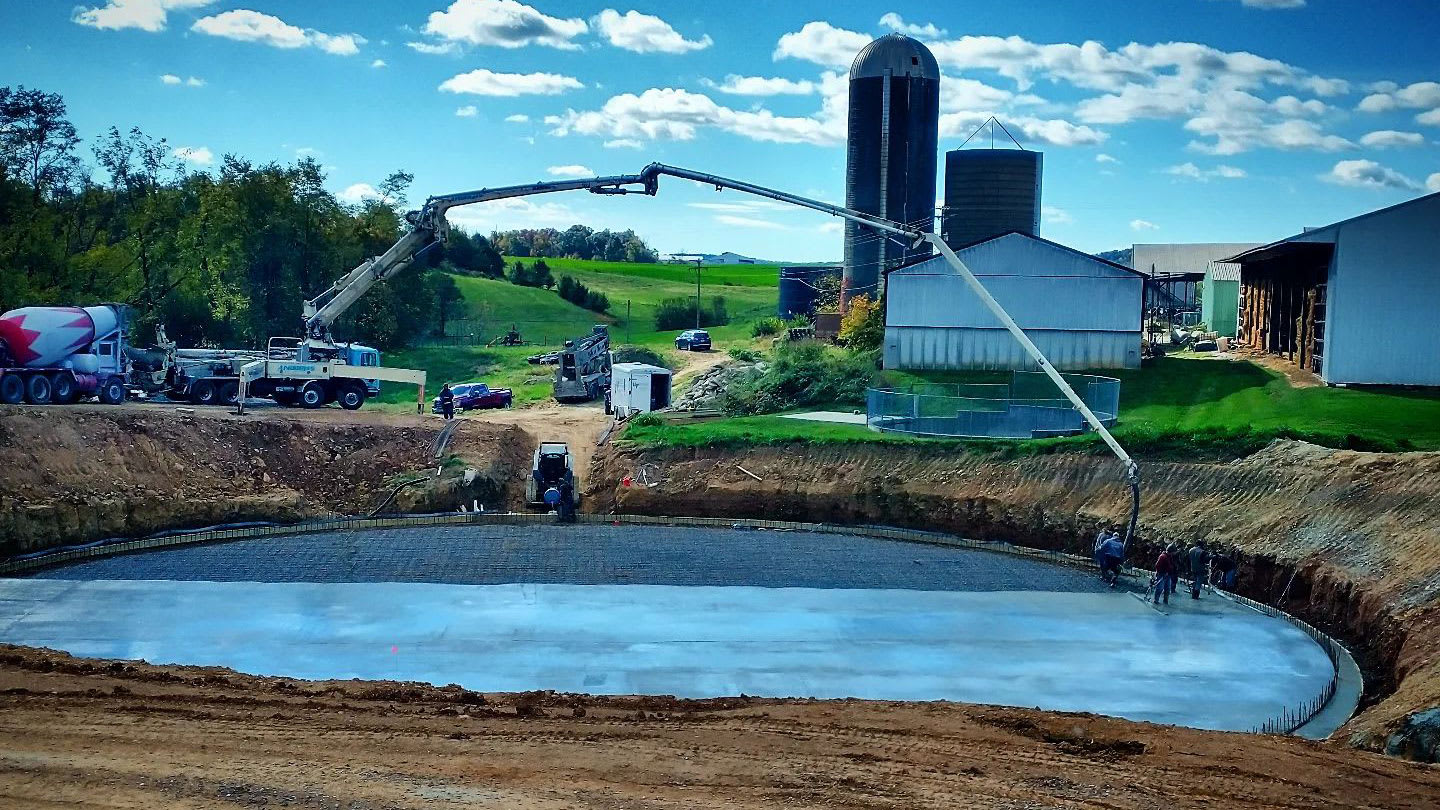
Boom Pump Reach
Boom pumps are commonly identified by boom size, which provides an indication of their placement capabilities.
However, the advertised boom size should not be treated as the exact usable horizontal reach on every project.
Actual placement capability can be affected by:
- Pump position
- Boom geometry
- Structure height
- Obstacles
- Outrigger placement
- Required safety clearances
This is why accurate jobsite information is important when selecting a boom pump.
Line Pump Distance
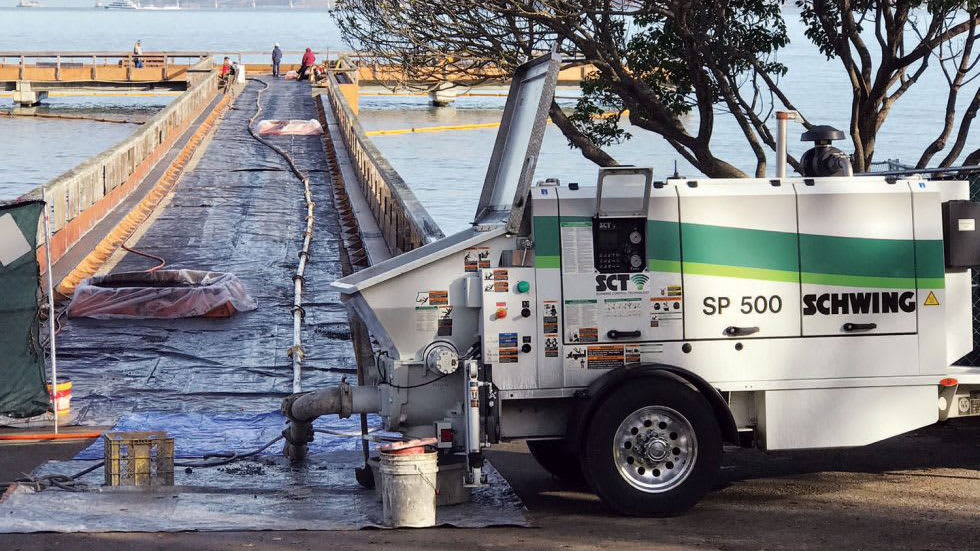
Line pumps can often move concrete considerable distances through pipe and hose, but there is no single universal maximum distance.
Actual pumping capability depends on factors such as:
- Pump capacity
- Concrete mix
- Aggregate size
- Pipe diameter
- Hose diameter
- Vertical lift
- Number of elbows
- Total line length
- Required production
When a project involves an unusually long or difficult pumping run, the delivery system should be planned before the pour begins.
How Much Concrete Can a Pump Move?
Concrete pump output is commonly measured in cubic yards per hour.
Different pumps have different maximum rated capacities.
However, rated output and actual jobsite production are not always the same.
Real-world production can be affected by:
- Ready-mix truck arrival times
- Concrete supply
- Mix consistency
- Delivery line configuration
- Placement crew speed
- Pump setup
- Elevation
- Site conditions
A pump capable of moving material faster than the placement crew can handle does not automatically make the pour more efficient.
Equipment selection should take the entire operation into account.
When Should You Use a Concrete Pump?
Concrete pumps can be useful whenever direct placement from the ready-mix truck is difficult, inefficient, or impossible.
Difficult-to-Access Pours
Concrete pumps allow material to reach areas where a mixer truck cannot safely travel.
This may include:
- Backyards
- Interior spaces
- Areas behind existing structures
- Elevated work areas
- Below-grade locations
Foundations and Footings
Concrete pumps are commonly used for foundations because they allow controlled material placement along the entire footing or wall area.
Slabs and Flatwork
Pumps can help crews distribute concrete efficiently across larger slabs while reducing the need to move material manually.
Commercial Construction
Commercial projects often require a combination of output, reach, and scheduling efficiency that makes pumping an important part of the placement process.
Multi-Story Construction
Boom pumps are particularly useful for moving concrete vertically and placing material on elevated structures.
Residential Construction
Concrete pumping is also common on residential projects where access around homes, landscaping, neighboring properties, or narrow driveways may be limited.
Pool Construction
Pools are frequently located behind homes or in areas inaccessible to a concrete mixer truck, making line pumping a practical solution.
Large-Volume Concrete Placement
Higher-volume pours may benefit from pumping when continuous material placement and production are important.
Concrete pumping offers several practical advantages depending on the project. Advantages of Pumping Concrete
Greater Placement Reach
Concrete can be delivered beyond the reach of a conventional ready-mix truck chute.
Access Around Obstacles
Pipe, hose, and boom systems can help crews place concrete around buildings, landscaping, excavations, and other obstacles.
Reduced Manual Material Handling
Pumping can reduce reliance on wheelbarrows and other labor-intensive placement methods.
Controlled Concrete Placement
The delivery hose or boom allows crews to place material where it is needed rather than moving concrete across the site after discharge.
Potentially Faster Placement
When the pump, ready-mix supply, and placement crew are properly coordinated, pumping can help maintain consistent production.
Renting a Concrete Pump
Renting can make sense for contractors who need pumping equipment for individual projects or who require different pump sizes depending on the job.
Rental can also provide access to specialized equipment without the investment associated with ownership.
Before scheduling a concrete pump rental, gather as much project information as possible.
Useful information includes:
- Project location
- Pour date
- Approximate yardage
- Type of concrete placement
- Required vertical reach
- Required horizontal reach
- Pumping distance
- Concrete mix
- Aggregate size
- Ready-mix supplier
- Jobsite access
- Overhead obstacles
- Available setup area
- Expected pour duration
Providing this information helps Andrews Equipment determine which pump is best suited to the project.
Buying a Concrete Pump
For contractors and pumping companies that use concrete pumps regularly, equipment ownership may make sense.
Buying a concrete pump can provide greater control over scheduling and allow a contractor to build pumping capacity into the business.
The correct equipment depends on the work the company performs.
Important considerations include:
- Typical project size
- Required boom reach
- Pump output
- Truck configuration
- Service requirements
- Parts availability
- Expected annual utilization
- Purchase budget
Andrews Equipment works with customers looking for both new and used concrete pumping equipment.
New vs. Used Concrete Pumps
Both new and used pumps can be good investments when the equipment fits the buyer’s needs.
New Concrete Pumps
New equipment may offer:
- Current technology
- Manufacturer warranty
- Known operating history
- Latest equipment configurations
- Lower initial wear
Used Concrete Pumps
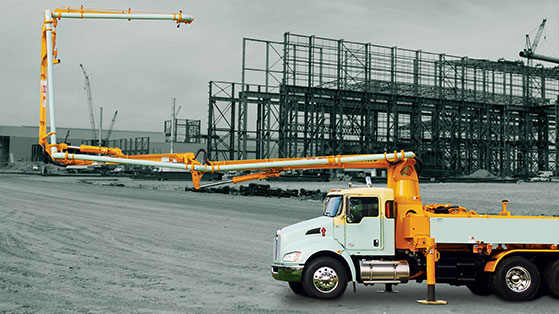
Used concrete pumping equipment may provide a lower acquisition cost while still offering substantial working life.
When evaluating a used concrete pump, consider:
- Equipment age
- Operating hours
- Maintenance history
- Pumping system wear
- Hydraulic condition
- Boom condition
- Structural inspections
- Truck condition
- Replacement-part availability
The purchase price should never be the only factor considered.
Overall equipment condition and expected operating cost matter just as much.
Concrete Pump Parts
Concrete pumps operate in a demanding environment, and many components are subject to regular wear.
Depending on the pump, common replacement and wear components may include:
- Wear plates
- Cutting rings
- Delivery pipe
- Concrete hose
- Elbows
- Couplings
- Seals
- Pistons
- Gaskets
- Cleaning accessories
Using the correct parts and replacing worn components before failure can help maintain pump performance and reduce unexpected downtime.
Andrews Equipment supports concrete pumping operations with parts for a range of equipment and applications.
Concrete Pump Maintenance and Repair
Routine maintenance is essential for keeping concrete pumping equipment reliable.
Concrete pumps combine hydraulic, mechanical, electrical, and structural systems that operate under demanding conditions.
Maintenance may include attention to:
- Hydraulic systems
- Pumping cylinders
- Wear components
- Delivery systems
- Boom components
- Lubrication systems
- Electrical systems
- Safety systems
- Truck components
Warning Signs a Concrete Pump May Need Service
Operators should investigate changes in equipment behavior rather than allowing small problems to develop into larger repairs.
Possible warning signs include:
- Reduced pumping output
- Unusual hydraulic pressure
- Hydraulic leaks
- Abnormal noises
- Excessive component wear
- Recurring blockages
- Electrical faults
- Boom-control issues
- Changes in pump performance
Experienced service technicians can help diagnose problems and identify worn or damaged components.
Concrete Pump Safety
Concrete pumping equipment should always be operated according to manufacturer instructions, applicable safety requirements, and established jobsite procedures.
Important considerations include:
- Proper equipment setup
- Stable outrigger placement
- Ground conditions
- Overhead power lines
- Hose handling
- Delivery-line condition
- Equipment inspection
- Communication between crews
- Safe working distances
- Properly trained personnel
Concrete pumping involves significant pressures, heavy equipment, moving machinery, and changing jobsite conditions.
Planning and communication should begin before pumping starts.
Concrete Pump Terms Contractors Should Know
Understanding common concrete pumping terminology can make equipment selection and project planning easier.
Boom
The articulated structure on a boom pump used to position the concrete delivery line.
Hopper
The receiving area where concrete enters the pump from the ready-mix truck.
Outriggers
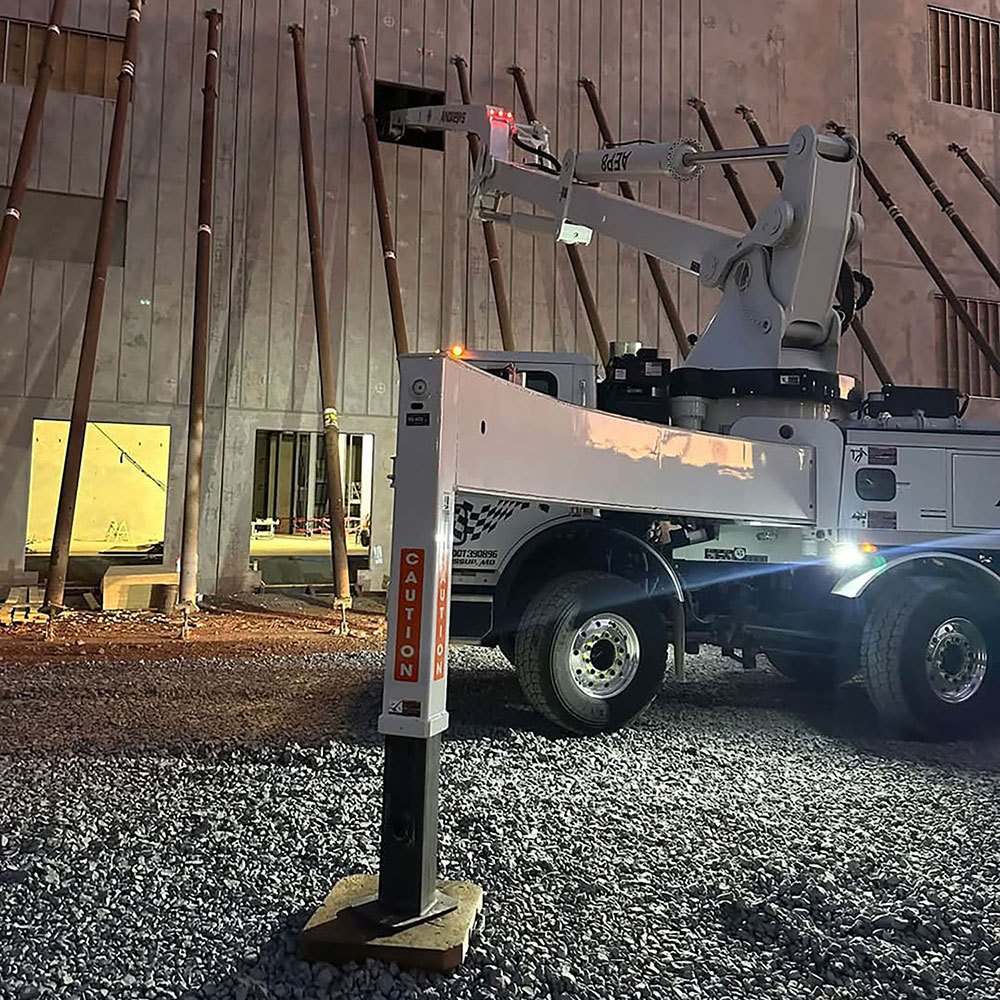
Structural supports extended from a boom pump truck to stabilize the equipment during operation.
Delivery Line
The pipe and hose system that carries concrete from the pump to the placement area.
Line Pump
A pump that moves concrete through delivery pipe and hose rather than through a placing boom.
Trailer Pump
A towable concrete pump commonly used for line pumping.
Concrete Pump Truck
A general term commonly used for truck-mounted concrete pumping equipment.
Pump Output
The amount of concrete a pump can theoretically move during a given period, usually expressed in cubic yards per hour.
Pumping Pressure
The pressure generated by the pump to move concrete through the delivery system.
Vertical Reach
The height a boom can reach above the pump.
Horizontal Reach
The distance a boom can extend horizontally from the pump setup location.
Aggregate Size
The size of stone or other aggregate used in the concrete mix. Aggregate size can affect pump and delivery-system requirements.
Slump
A measurement commonly used to describe the consistency and workability of fresh concrete.
Frequently Asked Questions About Concrete Pumps
Concrete Pump Equipment, Rentals, Parts and Service From Andrews Equipment
Concrete pumping is specialized work, and the right equipment can make a substantial difference in how smoothly a project is completed. Andrews Equipment works with contractors and concrete professionals who need dependable pumping equipment and knowledgeable support. Whether you need a concrete pump for one project or operate pumping equipment every day, we can help with:
Concrete Pump Rentals
Choose from concrete pumping equipment suited to different project sizes, placement requirements, and jobsite conditions.
New Concrete Pumps
Explore new equipment options for expanding or replacing your concrete pumping fleet.
Used Concrete Pumps
Find pre-owned concrete pumping equipment for contractors looking for additional capacity or a cost-effective equipment option.
Concrete Pump Parts
Get the wear components, delivery-system parts, and replacement items needed to keep equipment working.
Concrete Pump Service and Repair
From routine maintenance to troubleshooting and repairs, experienced technicians can help keep concrete pumping equipment operating properly.